
Let’s be honest.
Most Laravel agencies don’t struggle with talent.
They struggle with consistency.
One developer writes clean, scalable code.
Another ships something that works… but creates problems later.
Same team. Same project.
Different standards.
That’s where things start to break:
- inconsistent code quality
- longer review cycles
- hidden bugs in production
- frustrated senior developers
And over time?
Your delivery slows down, even if your team grows.
Why Most Laravel Code Reviews Fail
Code reviews are supposed to improve quality.
But in many teams, they become:
- subjective
- inconsistent
- dependent on who reviews
One reviewer focuses on performance.
Another focuses on formatting.
Someone else just checks “does it work?”
The Real Problem
There’s no standard checklist.
And without a checklist:
Code review becomes opinion, not process.
What a Good Laravel Code Review Should Do
A strong review process should:
- catch issues before production
- enforce team-wide standards
- reduce back-and-forth
- make junior developers better
Not slow things down.
Laravel Code Review Checklist (Agency Standard)
Let’s break this into practical sections you can actually use.
1. Code Style & Formatting (First Filter)
Start here.
If formatting is wrong, everything else is noise.
What to Check
- PSR-12 compliance
- consistent indentation
- proper naming conventions
- no unused imports
Best Practice
And in CI:
./vendor/bin/pint --test
Why This Matters
- removes subjective feedback
- speeds up reviews
- avoids unnecessary comments
2. Logic & Structure (Does It Scale?)
This is where most issues hide.
What to Look For
- is logic inside controllers minimal?
- are services/repositories used properly?
- is business logic reusable?
Red Flags
- fat controllers
- duplicated logic
- unclear method responsibilities
Real Insight
If logic is hard to read, it’s hard to maintain.
3. Database & Query Optimization (Critical)
This is where production issues start.
What to Check
- N+1 queries
- proper eager loading
- correct indexing usage
- unnecessary queries
Example Problem
$users = User::all();

foreach ($users as $user) {
    echo $user->posts;
}
Fix
$users = User::with('posts')->get();
Why This Matters
Bad queries can slow your app by 2–10x. You need to optimize performance.
4. Validation & Security (Non-Negotiable)
Never skip this.
What to Check
- input validation (Form Requests preferred)
- authorization (policies, gates)
- no raw SQL injections
- proper escaping
Common Mistake
Skipping validation in “internal tools”
→ still dangerous
Real Insight
Security bugs are not visible — until they are critical.
5. Testing (Does It Break Later?)
Code without tests = future problems.
What to Check
- does this feature have tests?
- are edge cases covered?
- are tests meaningful or superficial?
Minimum Standard
- feature tests for endpoints
- unit tests for core logic
Why This Matters
- reduces regressions
- increases confidence
- speeds up deployment
Modern teams are also using AI to build Laravel apps with AI while ensuring tests are generated alongside features.
6. API & Response Consistency
Especially important for SaaS products.
What to Check
- consistent response structure
- proper status codes
- error handling
Bad Example
{ "status": "ok" }
Better
{
  "success": true,
  "data": {...}
}
7. Naming & Readability
This sounds basic. It’s not.
What to Check
- meaningful variable names
- clear method names
- no abbreviations
Real Insight
Code is read more than it is written.
8. Reusability & DRY Principle
What to Check
- repeated logic
- reusable services
- shared helpers
Red Flag
Same logic copied in multiple controllers.
9. Error Handling & Logging
What to Check
- proper exception handling
- meaningful logs
- no silent failures
Why This Matters
Debugging production issues becomes easier.
10. Deployment Awareness
Most developers ignore this.
What to Check
- migrations safe?
- backward compatibility maintained?
- config changes handled?
Real Insight
Good code that breaks deployment is still bad code.
Ready to Code Smarter with Laravel?
Meet LaraCopilot — your AI full-stack assistant built for Laravel developers.
Skip the boilerplate, build faster, and focus on what matters: problem solving.
Quick Summary (What Reviewers Should Scan)
Before approving any PR:
- formatting passes (Pint)
- no N+1 queries
- validation + security in place
- tests added
- logic is clean and reusable
If these are covered:
→ you’re already ahead of most teams
The Real Problem in Agency Teams
Let’s address reality.
Even with a checklist:
- junior developers miss things
- reviewers get tired
- deadlines push compromises
That’s why quality becomes inconsistent.
How Modern Teams Solve This
They don’t rely only on reviews.
They improve what goes into the PR.
How LaraCopilot Helps You Pass Code Review First Time
Instead of:
- writing code
- waiting for review
- fixing issues
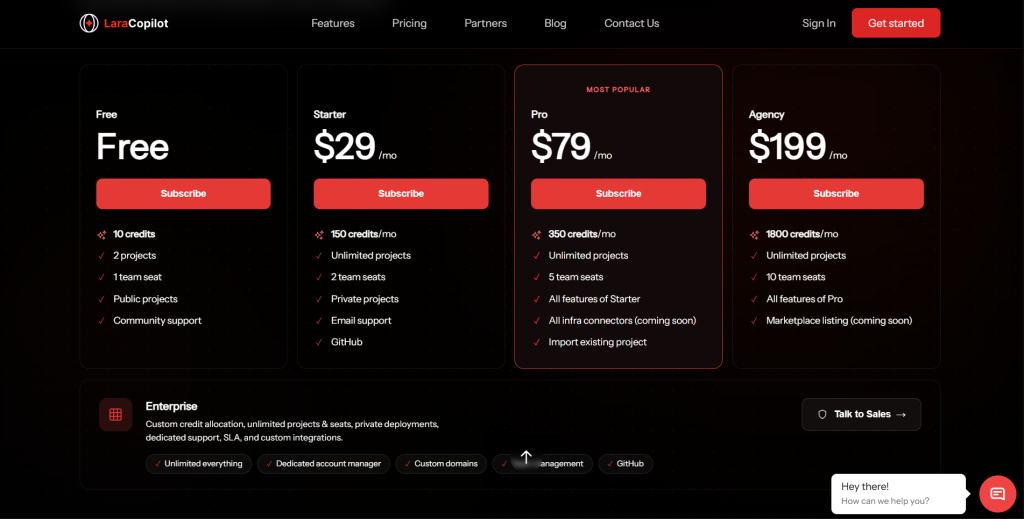
You start with better code. You can start with Agency Plan in LaraCopilot.
With LaraCopilot, you describe what you want:
→ “Build feature with validation, tests, and optimized queries”
And it generates:
- structured Laravel code
- proper validation
- clean formatting
- optimized queries
What This Changes
Instead of fixing issues later:
→ you prevent them earlier
Real Impact
Teams using AI-assisted workflows:
- reduce review cycles by 40–60%
- ship faster
- maintain consistency across developers
What We Learned Reviewing 1,000+ Laravel PRs
Let me share something most checklists won’t tell you.
The biggest problem in code reviews is not bad code.
It’s late feedback.
By the time a PR reaches review:
- the developer is already mentally done
- context has faded
- changes feel “expensive”
So even when issues are found…
They either:
- get patched quickly (not fixed properly)
- or ignored to “move fast”
The Pattern We Noticed
Across hundreds of PRs, the same thing kept happening:
- junior developers focused on “making it work”
- reviewers focused on “fixing what’s wrong”
But no one focused on:
→ writing it right the first time
What Actually Works
The teams that scaled quality didn’t improve reviews.
They improved pre-review discipline.
Before opening a PR, developers would ask:
- Would I approve this myself?
- Is this production-ready?
- Did I check queries, validation, and edge cases?
This simple shift changed everything.
The Real Insight
Code review should be a confirmation step, not a correction step.
Why This Matters for You
If your team relies heavily on reviewers to “clean things up”:
- your delivery will slow down
- your best developers will burn out
- your quality will always fluctuate
But if your team starts shipping review-ready code:
- PR cycles shrink
- confidence increases
- consistency becomes default
That’s the difference between teams that “manage code”…
and teams that scale systems.
PR Self-Check: Before You Request Review
Before you click “Create Pull Request”, pause for 2 minutes and run through this.
If you can’t confidently say “yes” to most of these, it’s not ready yet.
Logic & Structure
- Does this code solve the problem clearly (not just “works”)?
- Is business logic placed outside controllers (services, actions, etc.)?
- Is anything unnecessarily complex or over-engineered?
Database & Performance
- Did I avoid N+1 queries?
- Am I using eager loading where needed?
- Am I querying only the data I actually need?
Validation & Security
- Are all inputs properly validated (Form Requests preferred)?
- Is authorization handled (policies/gates)?
- Am I avoiding any unsafe queries or exposed data?
Testing
- Did I add tests for this feature?
- Are edge cases covered (not just happy path)?
- Would I trust this in production without manual testing?
Code Quality
- Does this pass Laravel Pint (
-test)? - Are variable and method names clear and meaningful?
- Is there any duplicate or unnecessary code?
Reusability
- Can any part of this be reused elsewhere?
- Did I avoid copying logic across files?
Deployment Awareness
- Are migrations safe to run in production?
- Will this break anything existing?
- Are configs/env changes handled properly?
Final Question (Most Important)
If this PR went to production right now…
would I be confident?
If the answer is not a clear yes, fix it before requesting review.
The Shift in 2026
Code reviews are not going away.
But they are changing.
From:
→ catching mistakes
To:
→ validating already good code
This is part of a larger shift toward an AI-powered Laravel development workflow.
Ready to Code Smarter with Laravel?
Meet LaraCopilot — your AI full-stack assistant built for Laravel developers.
Skip the boilerplate, build faster, and focus on what matters: problem solving.
Closing!
The best teams don’t rely on better reviewers.
They rely on better inputs.
AI-Generated Clean Code → Your Advantage
If you want:
- consistent code quality
- faster PR approvals
- fewer production issues